
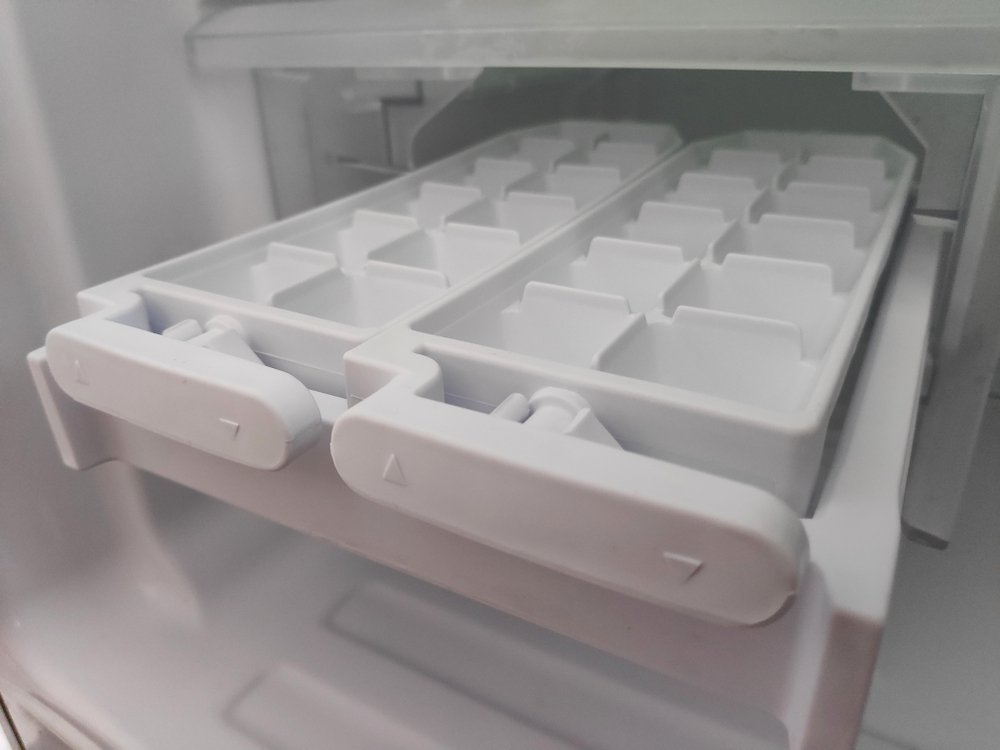
Freedom Appliance Repair Okotoks hears about a fridge ice maker not working more often than almost any other kitchen complaint. The good news is that many ice maker failures trace back to a short list of causes. Some you can check in ten minutes with no tools. Others need a trained technician and the right parts. This guide explains how the system works, which symptoms point to which fault, and when to stop troubleshooting and book a visit.
How a Fridge Ice Maker Actually Works
An ice maker is a small machine inside your freezer. It depends on four things working together: water, cold air, power, and a simple timing mechanism. If any one of them fails, the cubes stop.
First, a water inlet valve opens and sends a measured splash of water into a mold. Next, the freezer air chills that water until it turns solid. A thermostat inside the ice maker senses when the cubes are ready. Finally, a heater warms the mold for a few seconds so an arm or motor can push the cubes into the bin.
A full cycle usually takes around 90 minutes to three hours. As an industry estimate, a household unit produces roughly 1.5 to 4 kg (3 to 8 lb) of ice per day. Because the cycle is slow, a single missed step can look like total failure when the real fault is small.
Fridge Ice Maker Not Working: Start With These Checks
Before you suspect a broken part, rule out the simple causes. These checks take little time and need no tools. Work through them in order.
Is the Fridge Ice Maker Not Working Because It Is Switched Off?
Look for the small wire feeler arm on the ice maker. If the arm is locked in the upright position, the unit is off. Lower it gently and wait a few hours. Many models also have a power switch or a control panel setting. A child, a cleaning cloth, or a power surge can switch the feature off without anyone noticing.
Is the Ice Bin Jammed?
Check the bin for a large frozen clump. Melted ice can refreeze into one block and trap the feeler arm. Remove the bin, let it thaw, dry it, and slide it back in fully. A bin that sits even a few millimetres out of place can stop production.
Is the Freezer Cold Enough?
Ice makers need a freezer near -18°C (0°F). If the freezer is warmer than that, cubes form slowly or stay soft and slushy. Place a thermometer in the freezer for several hours to confirm. If the temperature runs high, the issue may be a cooling fault rather than the ice maker itself. Our article on how to tell when a fridge thermostat needs replacing covers that side of the problem.
Symptom to Cause: What Your Ice Maker Is Telling You
The way an ice maker fails gives strong clues. Use this table as a quick reference before you decide on a next step.
| Symptom | Likely cause | What a technician does |
|---|---|---|
| No ice at all | Failed water inlet valve or blocked supply line | Tests valve voltage and flow, replaces the valve if needed |
| Small, hollow cubes | Low water pressure or partly clogged filter | Checks the supply line and filter, clears the restriction |
| Ice tastes or smells odd | Old filter or absorbed freezer odours | Replaces the filter, cleans the bin and mold |
| Cubes fuse into clumps | Slow cycle, melt and refreeze, or warm freezer | Tests the heater and the freezer temperature |
| Ice maker runs but never dumps | Failed ejector motor or mold heater | Tests the motor and heater, replaces the faulty part |
| Water leaks near the ice maker | Frozen or cracked fill tube | Thaws the tube and inspects for cracks |
Common Causes Behind Ice Maker Failure
Now that you know the symptoms, here is what usually sits behind them. These causes account for most of the service calls we see.
The Water Inlet Valve
The valve opens for a few seconds each cycle. Mineral deposits, a worn solenoid, or a pinched line can stop it from opening. Okotoks has hard municipal water, so scale buildup is a common reason valves fail early. You will hear the fridge hum at the moment the valve should open, but no water arrives.
A Frozen Fill Tube
The fill tube carries water into the mold. If the freezer door sits ajar or the tube picks up a slow drip, ice can build inside it and block the flow. You can often spot a thick ice plug at the top of the tube. Do not chip it with a knife, because a cracked tube means a larger repair.
The Water Filter
A clogged filter reduces flow to the ice maker and the water dispenser at the same time. Most manufacturers recommend changing the filter about every six months. If your dispenser water also comes out slowly, start there. We wrote about the health side of this habit in our post on why changing your fridge water filter matters.
The Mold Heater and Ejector
If water freezes but the cubes never drop, the heater or the ejector motor is the likely culprit. These parts sit inside the sealed ice maker module. They are not safe to test without a meter, and the module often needs replacing as a unit.
What You Can Safely Try at Home
Some steps are safe for any homeowner with a fridge ice maker not working. Keep to this short list and stop when you reach anything that involves wiring or removing panels.
- Confirm the feeler arm is down and the power switch is on.
- Empty and dry the ice bin, then reseat it fully.
- Check that the water supply valve behind the fridge is open.
- Look for kinks in the water line when you pull the fridge out gently.
- Replace the water filter if it has passed its recommended date.
- Check the freezer temperature with a thermometer.
After any change, give the ice maker 24 hours to restart its cycle. Many people give up after an hour and miss that the fix already worked. Most manufacturers also publish model-specific guidance, and the ENERGY STAR refrigerator guide explains how correct temperature settings help your fridge perform as designed.
When to Call a Technician
A fridge ice maker not working after the checks above needs professional eyes. Call for service if you see any of these signs: water pooling on the floor, a frozen fill tube that returns within days, a freezer that will not hold temperature, or an ice maker that runs but never dumps. These point to failed parts or a sealed-system issue. Guessing can turn a small repair into a bigger one.
Our technicians diagnose the fault first and explain it in plain language. You receive an honest quote after the assessment, before any work begins. If you want to see how we handle cooling faults generally, visit our fridge repair service page or browse the full list of appliances we repair.
Frequently Asked Questions
Why does my ice maker make ice but the cubes are tiny?
Small cubes usually mean the mold is not filling completely. A clogged filter, low water pressure, or a partly frozen fill tube is the usual cause. Replace the filter first, then check the supply line for kinks.
How long should I wait after resetting the ice maker?
Wait at least 24 hours. A new cycle takes up to three hours, and the bin needs time to fill. If nothing appears after a full day, book a diagnostic visit.
Can a warm freezer stop ice production?
Yes. Ice makers need a freezer close to -18°C (0°F). A warmer freezer slows freezing and can leave soft, clumped cubes.
Is it safe to use a hairdryer on a frozen fill tube?
A brief, low-heat pass is sometimes used, but it can damage plastic parts and wiring. If the tube refreezes, a technician should find out why the ice is forming.
Contact Freedom Appliance Repair Okotoks
If your ice maker still refuses to cooperate, we are ready to help. Call Freedom Appliance Repair Okotoks at (403) 889-6068 to book a diagnostic visit. We serve Okotoks and Black Diamond, and we will explain every finding before we repair anything.
