
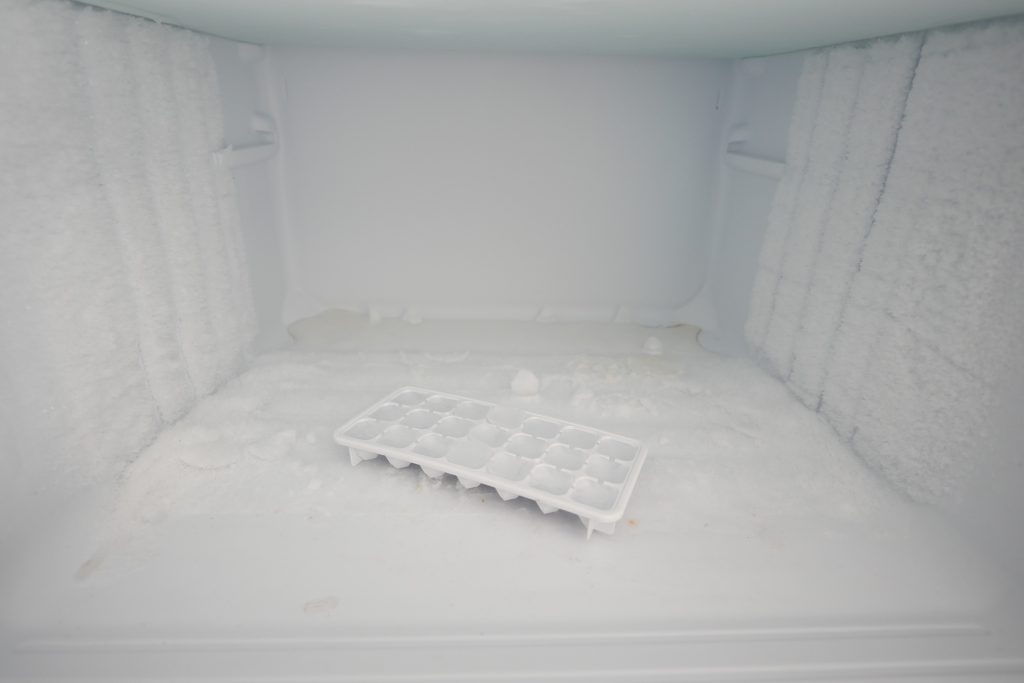
Ice build up on fridge back wall is a common issue that many homeowners notice over time. However, it often starts as a small patch of frost and slowly turns into a thicker layer of ice. As a result, cooling performance drops and food storage becomes less reliable.
At Freedom Appliances Calgary, we see this problem frequently in both newer and older refrigerators. Therefore, understanding what causes this issue helps you act early and avoid costly repairs. In addition, simple maintenance steps can often prevent the situation from getting worse.
Why Ice Forms on the Back Wall
Ice inside a fridge usually points to a moisture problem. When warm air enters the fridge, it carries humidity that turns into frost once it touches cold surfaces. Consequently, the back wall becomes the main area where ice collects.
Another common reason is frequent door opening. For example, every time the door opens, warm air enters and increases condensation. Similarly, if the door seal is worn out, outside air leaks in continuously and creates the same effect.
Blocked airflow can also lead to ice buildup. When food items are placed too close to the back panel, cold air cannot circulate properly. As a result, certain spots become colder than others, causing frost to form unevenly.
Faulty Defrost System Problems
Modern fridges are designed to defrost automatically. However, when the defrost system fails, ice starts to accumulate behind the back panel. This system includes components like the defrost heater, thermostat, and timer.
If the heater stops working, frost will not melt during the defrost cycle. Therefore, ice keeps building up layer by layer. In the same vein, a faulty thermostat may fail to signal when defrosting is needed.
In some cases, the defrost timer or control board may not activate the cycle at all. As a result, the fridge continues cooling without any pause, which leads to heavy ice buildup over time.
If you notice thick ice and reduced cooling, it may be time to check professional help through fridge repair okotoks.
Drainage Issues Behind the Fridge Wall
A clogged defrost drain is another hidden cause of ice buildup. During normal operation, melted frost should flow through a drain tube. However, when this tube becomes blocked, water has nowhere to go.
As a result, water refreezes at the back wall and forms ice layers. This problem often goes unnoticed until the ice becomes visible inside the fridge compartment.
Food particles or debris can easily block the drain opening. In addition, freezing temperatures can cause leftover water to solidify inside the tube. Consequently, regular cleaning helps prevent this issue.
If drainage problems extend to other appliances, you may also want to review services like dishwasher repair okotoks for similar maintenance insights.
Temperature Settings and Usage Habits
Incorrect temperature settings can also contribute to ice formation. If the fridge is set too cold, moisture freezes faster than normal. Therefore, even small amounts of humidity can turn into visible frost.
Overloading the fridge is another factor. When too many items are packed inside, airflow becomes restricted. As a result, cold air cannot distribute evenly, leading to freezing in certain areas.
Likewise, placing hot food directly into the fridge introduces excess moisture. This creates condensation that later freezes on the back wall. In other words, simple daily habits can directly impact ice buildup.
For broader appliance care, many homeowners also explore solutions like washer repair okotoks to maintain overall home efficiency.
How to Fix Ice Build Up Safely
The first step is to unplug the fridge and allow the ice to melt naturally. However, avoid using sharp tools to remove ice, as this can damage internal components. Instead, let the process happen gradually.
Next, clean the drain hole and check for blockages. Therefore, warm water can be used to flush the drain and restore proper flow. In addition, inspect the door gasket to ensure it seals tightly.
Adjust the temperature settings to recommended levels. Most importantly, keep enough space between food items and the back wall to allow airflow.
If the issue continues, it may indicate a deeper mechanical problem. In that case, professional diagnosis is the safest option through services like appliance repair okotoks.
When to Call for Professional Help
Some signs clearly indicate that expert service is needed. For instance, if ice returns quickly after defrosting, the defrost system may be failing. Similarly, unusual noises or inconsistent cooling suggest internal issues.
Electrical components such as sensors and control boards require proper testing tools. Therefore, attempting to fix them without experience may cause further damage.
At Freedom Appliances Calgary, we handle these situations with detailed inspection and accurate repair methods. As a result, homeowners can restore proper cooling without repeated problems.
If other kitchen appliances show similar performance issues, services like oven repair okotoks can also help maintain full kitchen functionality.
FAQs
What causes ice on the back wall of a fridge?
Ice usually forms due to moisture entering the fridge, poor airflow, or a faulty defrost system that fails to remove frost properly.
Is ice buildup dangerous for my fridge?
Yes, excessive ice can block airflow and strain components. As a result, it reduces cooling efficiency and may lead to costly repairs.
How often should I defrost my fridge?
Most modern fridges defrost automatically. However, if ice appears frequently, manual defrosting may be needed until the root issue is fixed.
Can a bad door seal cause ice buildup?
Yes, a damaged seal allows warm air inside. Consequently, moisture increases and freezes on the back wall over time.
Should I repair or replace my fridge?
If the issue is related to components like the defrost system, repair is usually effective. However, older units with multiple problems may require replacement.
